

There is a strange tendency in discussions of consciousness to mix together several different things.
We talk about consciousness, being conscious of ourselves, conscious decision-making, attention, introspection, and the subconscious as though they were all aspects of the same problem. They aren’t.
I want to begin with something much simpler: experience.
There is such a thing as seeing red, feeling pain, hearing music, tasting food, remembering something, or being frightened. These aren’t merely descriptions of physical events from the outside. They are phenomena occurring from a subjective point of view.
This gives us a basic distinction. There is the experience, and there is the subject of the experience; the experiencer, if you like. The question of consciousness is fundamentally the question of this subjectivity: why is there experience for a subject at all?
This is roughly what philosophers such as David Chalmers are pointing toward when they speak of “what it is like” to experience something. The phrase can sound unnecessarily mysterious, but the underlying observation is simple. A brain can process information about a hot stove, withdraw a hand, form a memory, and report “that was painful.” But in a conscious organism, there is also the pain itself. There is something it is like to be in that state.
Chalmers calls explaining this the hard problem of consciousness.
I am not convinced that the hard problem is as hard as it is sometimes made out to be.
No Spark of Consciousness
We have encountered something like this problem before.
For centuries, people thought there was something mysterious about life itself. You could describe the physical components of an organism, but surely there had to be some additional “spark of life” that distinguished the living from the dead. This intuition eventually produced various forms of vitalism.
We no longer need a vital force to explain life. A living organism is an extraordinarily complicated physical system. Metabolism, homeostasis, reproduction, cellular organization, nervous systems, and all the other processes associated with life are physical processes. There is no additional substance of “life” floating above them.
I think consciousness may be similar.
There does not need to be a “spark of consciousness” added to a sufficiently complex physical system. Consciousness can simply be something that certain physical systems do.
In other words, I think Chalmers’ philosophical zombie cannot exist. If we were to replicate a human being exactly down to the last neuron, that being will have consciousness. Because it will be sufficiently complex system of the kind that leads to the emergence of consciousness. A philosophical zombie is self-contradictory.
This is a physicalist position, but it is also an emergentist one. Matter and energy are fundamental features of the physical world; life emerges from particular organizations of matter; and consciousness emerges from particular organizations of living systems. The important word here is “particular.”
I don’t think complexity alone is enough. What matters is the kind of organization involved. This is where embodiment becomes especially important.
The Body Creates a Point of View
A conscious organism isn’t merely an information processing machine.
It has a body. It has needs. It must maintain itself. It has to obtain food, avoid danger, regulate its temperature, find shelter, reproduce, interact with other organisms, and respond to changing conditions. It acts upon the world, and the world responds to its actions. It receives feedback and modifies its behaviour accordingly.
The organism therefore has a practical boundary between itself and its environment.
This may be crucial to the emergence of subjectivity.
A rock does not have anything it needs to accomplish. It doesn’t need food. It doesn’t try to escape a predator. It doesn’t act upon the environment in order to maintain itself. It doesn’t have a perspective from which the world matters.
An animal does.
The animal has an inside and an outside. There is something that belongs to the organism and something that lies beyond it. There are things that help it and things that threaten it. There are states it seeks and states it avoids.
Perhaps consciousness is what emerges when this kind of embodied organization becomes sufficiently complex that there is not merely a system interacting with the world, but a world experienced from the perspective of the system.
In that sense, consciousness creates separateness.
But “separateness” needs to be understood carefully.
Separate, But Not Separate From Nature
I find the language of oneness in spiritual traditions interesting, but I think it is often given a metaphysical interpretation that isn’t necessary.
Consider a Spinozist picture of reality.
There is one reality: Nature, or the universe. Everything that exists is a mode or configuration of that reality. A human being isn’t something that has been placed inside the universe from outside. A human being is something the universe is doing.
The same is true of a tree, a bacterium, a planet, or a brain.
There is therefore no contradiction in saying both:
I am not separate from the universe.
and
I am a separate subject.
The first means that I am not ontologically independent of nature. I am made of nature, sustained by nature, caused by nature, and ultimately continuous with everything else in nature.
The second means that my organism constitutes a distinct point of view within nature.
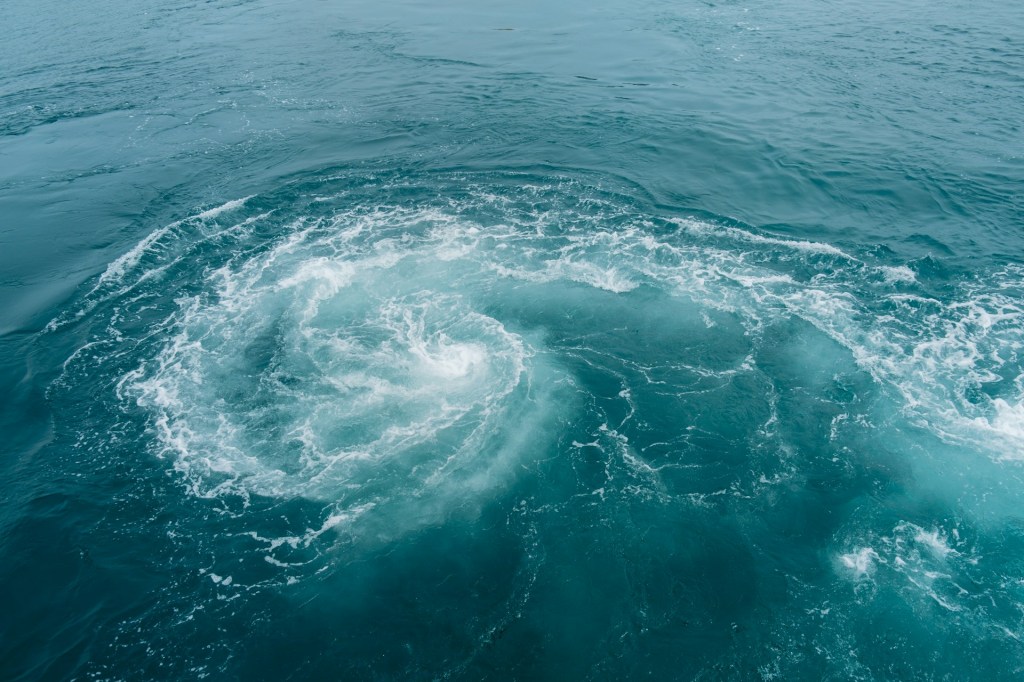
The distinction is similar to that between a whirlpool and the river. The whirlpool isn’t separate from the water. It is a temporary organization of the water. But it would be absurd to say that the whirlpool is therefore unreal.
It is real as a pattern, while not being an independent substance.
I think the conscious subject may be something like this, except vastly more complicated: a temporary pattern in nature that has acquired an inside.
Against the Cosmic Consciousness
This leads to a significant disagreement with a certain kind of spirituality.
One spiritual interpretation says that there is ultimately only one consciousness—the consciousness of the universe—and that individual consciousness is an illusion. The apparent separation between “me” and “the universe” is something spiritual practice is supposed to see through.
I think this gets the relationship between consciousness and oneness backwards.
I don’t think the universe needs to be conscious.
There can simply be one universe, one natural reality, containing many conscious organisms. The universe does not need to be one giant subject in order for everything to be fundamentally one.
In fact, I would say that the separateness is precisely what consciousness gives us.
The universe is not divided into separate substances merely because conscious organisms experience themselves as separate beings. Rather, particular organizations within the universe have developed the capacity to experience reality from their own perspectives.
The separateness is real at the level at which it exists.
It is experiential and functional, rather than absolute and metaphysical.
That distinction matters.
What About Panpsychism?
Panpsychism offers a very different response to the hard problem.
If we can’t understand how consciousness could emerge from something entirely non-conscious, perhaps consciousness was never absent from nature in the first place. Perhaps even fundamental physical entities possess some primitive phenomenal property.
This has an appealing simplicity. There is no transition from completely non-conscious matter to consciousness because some minimal form of experience is present all the way down.
But it creates another problem: how do countless primitive experiences become one unified subject?
An electron’s supposed experience and another electron’s supposed experience don’t obviously add up to the experience of a human being drinking coffee.
My view takes the opposite route.
I don’t think consciousness is fundamental. I think the universe is fundamental, and consciousness is something that emerges within it under particular conditions.
There is therefore no need to imagine tiny consciousnesses inside particles.
Consciousness appears when nature organizes itself into the right kind of system.
Why I Don’t Think Current LLMs Are Conscious
This also gives me a reason to be skeptical of claims that current large language models are conscious.
The issue isn’t that they’re artificial. I don’t think consciousness has to be biological in principle. A sufficiently sophisticated artificial system could conceivably become conscious.
The issue is that a language model is not remotely equivalent to the kind of embodied organism I have in mind.
It doesn’t have a biological body maintaining itself in an environment. It doesn’t have hunger, thirst, pain, reproduction, homeostasis, bodily needs, or a continuous sensorimotor relationship with the world in the way an animal does. It doesn’t act in the world and receive the kind of ongoing feedback that shapes an organism’s existence.
Its ability to produce language that sounds conscious is therefore not enough.
Intelligence and consciousness may be separable.
A system could become extraordinarily good at manipulating information without becoming a subject of experience.
The interesting question for artificial consciousness is consequently not simply whether a machine can behave as though it is conscious. It is whether we can construct a physical system with the kind of organization from which consciousness actually emerges.
The Subject Is Real, But Temporary
There is an important existential consequence to this view.
If consciousness is an emergent property of a physical organism, then the subject is real. It isn’t necessary to regard subjectivity as a cosmic mistake.
But the subject is also temporary.
You emerge from nature. You exist as a particular organization of nature for a while. You experience the world from your particular perspective. Then the organization eventually breaks down and the subject disappears.
There is no need to add a soul that survives this process. There is no need to posit a universal consciousness into which the subject eventually dissolves. And there is no need to conclude that because the subject is temporary, its experiences are somehow unreal or insignificant.
The opposite seems more reasonable to me.
The temporary nature of consciousness is precisely what makes its existence remarkable.
For a brief period, a piece of the universe becomes organized in such a way that there is something it is like to be that piece.
It can see mountains. It can listen to music. It can make things. It can fall in love. It can have children. It can suffer. It can laugh. It can have its heart broken. It can wonder what consciousness is.
The universe does not have to be conscious in order for this to be true. It has produced conscious beings capable of experiencing it.
In that limited and literal sense, the universe is experiencing itself through us, not because the universe is one enormous mind, but because conscious organisms are things the universe has produced.
Don’t Destroy the Subject but Don’t Worship It Either
This leaves me somewhere between two familiar attitudes toward the self.
One says that the self is fundamentally real and therefore must be protected, satisfied, preserved, and defended at almost any cost.
The other says that the self is ultimately an illusion and that freedom comes from dissolving identification with it.
I don’t find either necessary.
The subject is real. But it isn’t permanent.
It matters. But it isn’t everything.
It is not separate from nature. But it is genuinely a distinct perspective within nature.
And perhaps this is where the spiritual insight of non-attachment can be retained without adopting its metaphysics.
The problem may not be having a self. The problem may be treating the self as something absolute.
If I understand myself as a temporary emergent subject, then I can take my experiences seriously without treating them as sacred possessions. Pleasure can be enjoyed without demanding that it last forever. Pain can be endured without interpreting it as a violation of some cosmic order. Loss can hurt without implying that the universe has done something metaphysically wrong.
I don’t have to escape subjectivity.
I can simply recognize what it is.
I am here because a particular piece of nature has become organized in a particular way.
For a while, there is a subject here.
Then there won’t be.
But while there is, I get to experience the strange privilege of being this particular part of the universe.
Cover Photo by Wesley Shen on Unsplash


Leave a comment